
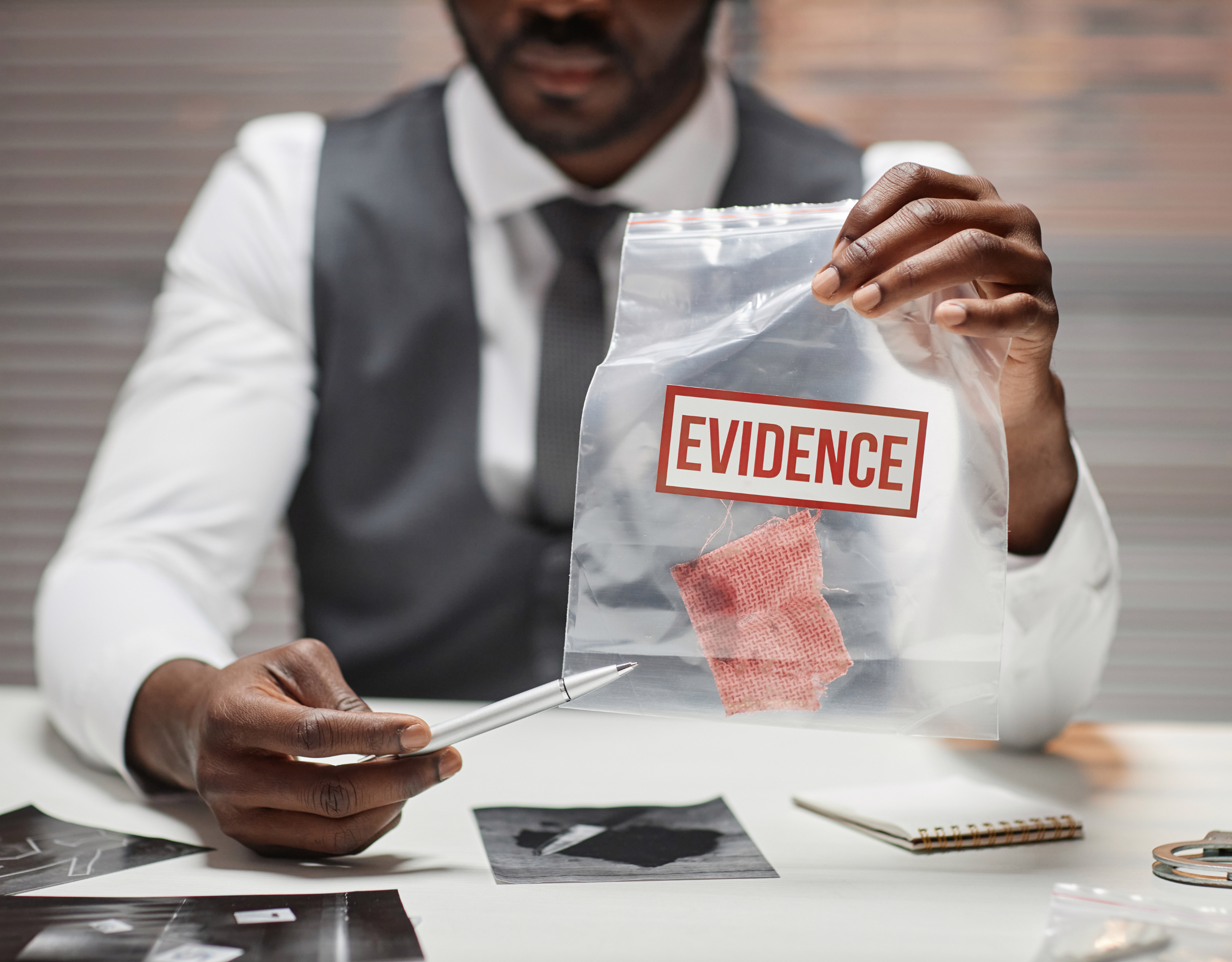
Many people assume that criminal cases depend on physical evidence such as fingerprints, DNA, surveillance footage, weapons, or forensic testing. Television shows and movies often reinforce the idea that every criminal investigation produces some form of tangible proof.
In reality, not every criminal allegation involves physical evidence. There are many situations where investigators must rely on witness accounts, statements, communications, or other forms of information when examining what may have occurred.
If you are involved in a criminal matter where little or no physical evidence exists, understanding how these cases are assessed can help provide perspective on the investigation and court process.
What Is Considered Physical Evidence?
Physical evidence generally refers to tangible items or materials that may help investigators understand an alleged event. Depending on the circumstances, this can include photographs, documents, recordings, forensic evidence, electronic devices, or other items collected during an investigation.
The availability of physical evidence varies significantly from case to case. Some investigations generate large amounts of evidence, while others may involve little more than statements provided by the individuals involved.
The absence of physical evidence does not automatically prevent investigators from examining an allegation. Instead, investigators often look at all available information when attempting to understand what occurred.
Every criminal matter is assessed based on the evidence that exists, not the evidence people assume should exist.
How Are Cases Investigated Without Physical Evidence?
When physical evidence is limited or unavailable, investigators often focus on gathering information from other sources. Witness accounts, statements, communications, timelines, and surrounding circumstances may all become important parts of the investigation.
Police may attempt to compare different versions of events, identify inconsistencies, verify information, and determine whether independent evidence supports or contradicts the allegations being examined.
In many situations, investigators are required to assess information that may be incomplete, conflicting, or difficult to verify. As a result, investigations often involve careful review and comparison of multiple sources of information.
The absence of physical evidence frequently increases the importance of other forms of evidence and information.
Why Witness Accounts Often Become More Important
In cases where little physical evidence exists, witness accounts may play a larger role in the investigation. Investigators often seek information from individuals who may have observed relevant events or possess information relating to the allegation.
However, witness accounts are not always identical. Different people may remember events differently, observe different details, or interpret situations in different ways. These differences can become an important consideration during an investigation.
The reliability, consistency, and credibility of information provided by witnesses may all become relevant when allegations are examined. Investigators often compare multiple sources of information in an effort to better understand what occurred.
Because every situation is unique, no single factor automatically determines the outcome of a criminal matter.
Does The Lack Of Physical Evidence Mean Charges Cannot Be Filed?
One of the most common misconceptions is that criminal charges cannot proceed without physical evidence. In reality, investigators assess the information available in each individual case.
Some matters involve extensive forensic evidence, while others are largely based on statements, observations, and surrounding circumstances. The type of evidence available often depends on the nature of the allegation and the events being investigated.
The absence of physical evidence does not automatically determine whether a matter will proceed. Likewise, the existence of physical evidence does not automatically determine the outcome of a case.
Every investigation requires an assessment of the information available and the circumstances surrounding the allegation.
Important Things To Remember
• Not every criminal case involves physical evidence.
• Investigators often rely on multiple sources of information.
• Witness accounts may become more significant when physical evidence is limited.
• Different forms of evidence may carry different levels of importance.
• Every criminal matter is assessed based on its own facts and circumstances.
• The absence of physical evidence does not automatically determine the outcome of a case.
How TC Legal Can Help
Cases involving limited physical evidence often raise important questions about investigations, witness information, and the strength of the allegations being examined. Understanding how evidence is evaluated can be an important part of navigating the criminal justice process.
TC Legal provides criminal defence representation throughout Alberta and assists individuals facing a wide range of criminal allegations. Whether an investigation involves extensive evidence or very little physical evidence at all, our team can help you understand your situation and evaluate your options.
If you have concerns about a criminal investigation or charges involving limited evidence, TC Legal can provide guidance tailored to your specific circumstances and help you move forward with confidence.


